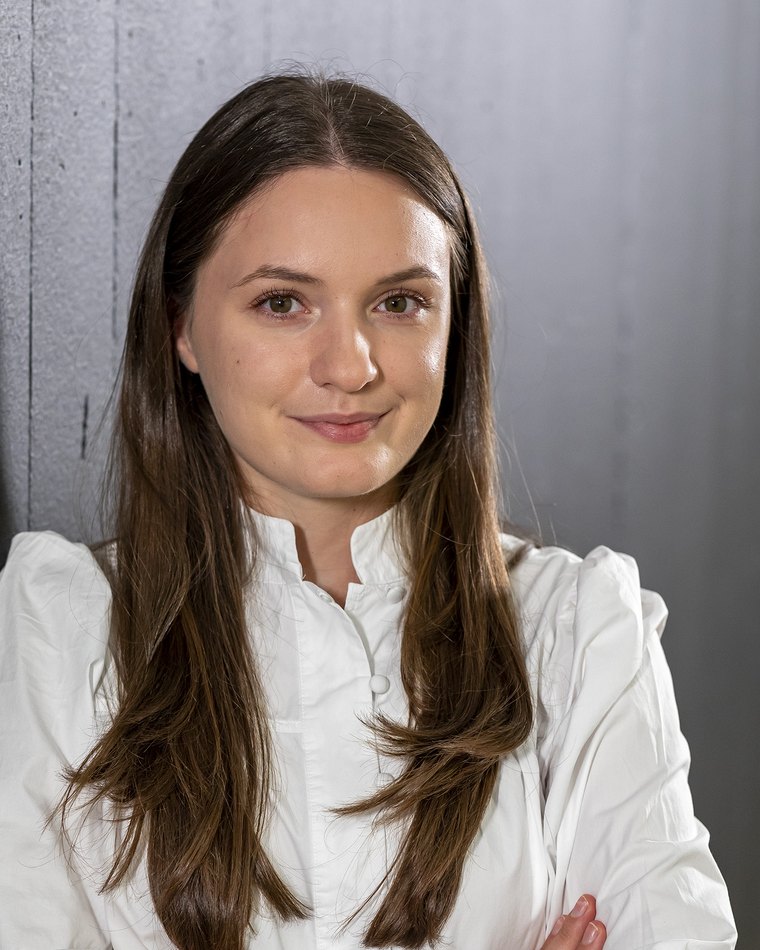
Rajna Fani
PhD Candidate, Machine Learning for Protein Design
Max Planck Institute of Biochemistry
Munich, Germany
fani [at] biochem.mpg.de
I am a doctoral researcher at the Max Planck Institute of Biochemistry in Munich, where I develop machine learning methods for protein design, combining generative modelling and representation learning to engineer functional proteins.
Before starting my PhD I completed a master's degree in Computer Science at the Technical University of Munich, writing my thesis at MIT's Laboratory for Computational Physiology on representation learning and masked modelling for clinical time series. I continue to mentor at MIT Critical Data's global clinical AI datathons.
I am always glad to hear from people working at the intersection of machine learning and the life sciences. The fastest way to reach me is email.
Research interests
- Generative models for protein design
- Protein representation learning
- Machine learning for biological sequence & structure
- Foundation models for clinical time series
- Evaluation of LLM-based systems
News
- Jun 2026 Started my PhD at the Max Planck Institute of Biochemistry, working on machine learning for protein design.
- 2026 Cached Summary Embeddings for Memory-Efficient EHR Inference accepted at CHIL 2026; an earlier version appeared at the ICLR 2026 Workshop on Time Series in the Age of Large Models.
- 2026 DataAtlas: Automatic Generation of Data Dictionaries Using Large Language Models published in JAMIA Open.
- 2026 Mentored at GenAI Health Hack 2026 in Barcelona, co-organised by Hospital Clínic de Barcelona and MIT Critical Data.
- Dec 2025 Three papers at ML4H 2025: one first-author in the Proceedings, plus a Findings paper and a Demo. The first-author paper was also presented at the NeurIPS 2025 TS4H workshop.
- 2025 Invited speaker at the 8th ZIMAM Digital Health Forum in Dubai and at the Future of Smart Health Forum in Hangzhou.
- Aug 2025 Completed my master's thesis as a visiting researcher at MIT's Laboratory for Computational Physiology.
Selected publications
All publications →-
Coefficient of Variation Masking: A Volatility-Aware Strategy for EHR Foundation Models
ML4H 2025 (Proceedings) & NeurIPS 2025 TS4H Workshop
First author -
Cached Summary Embeddings for Memory-Efficient EHR Inference
CHIL 2026 · earlier version at the ICLR 2026 Workshop on Time Series in the Age of Large Models
-
Towards Optimizing and Evaluating a RAG QA Chatbot Using LLMs with Human in the Loop
NAACL @ DASH 2024
Best paper award
Experience
- 2026–present Max Planck Institute of Biochemistry Doctoral Researcher, Machine Learning for Protein Design
- 2025–2026 Roland Berger AI Engineer
- 2025 MIT, Laboratory for Computational Physiology Visiting Researcher, master's thesis
- 2024–2025 Rohde & Schwarz AI/ML Engineer
- 2023–2024 SAP AI Research Intern
- 2023–2024 Get-Ikigai NLP Engineer
- 2022–2023 CGI Germany Software / AI Engineer
Education
- 2026–present PhD, Machine Learning for Protein Design Max Planck Institute of Biochemistry, Munich
- 2022–2025 MSc Computer Science, major in Machine Learning Technical University of Munich · thesis at MIT · Erasmus exchange at Aalto University, Helsinki
- 2019–2022 BSc Computer Science, minor in Computational Linguistics Ludwig Maximilian University of Munich
Honors
- 2025 Grant recipient, Society of Critical Care Medicine Datathon
- 2024 Best Paper Award, NAACL @ DASH
- 2024 Palantir Global Women in Tech Scholar
- 2023, 2025 Erasmus+ Scholarship, awarded twice for study abroad in Finland and the USA
- 2023 Winner, Microsoft GenAI Hackathon
Service & community
- Mentor and workshop facilitator, MIT Critical Data global clinical AI datathons (since 2024)
- Team Lead, Marketing & Alumni, TUM.ai student initiative (2023–2024)
- Chief Technology Officer, OlyNet student organization (2022–2024)